Why Sathu Maavu? Its Benefits, Possible Side Effects & 7 Facts Worth Knowing
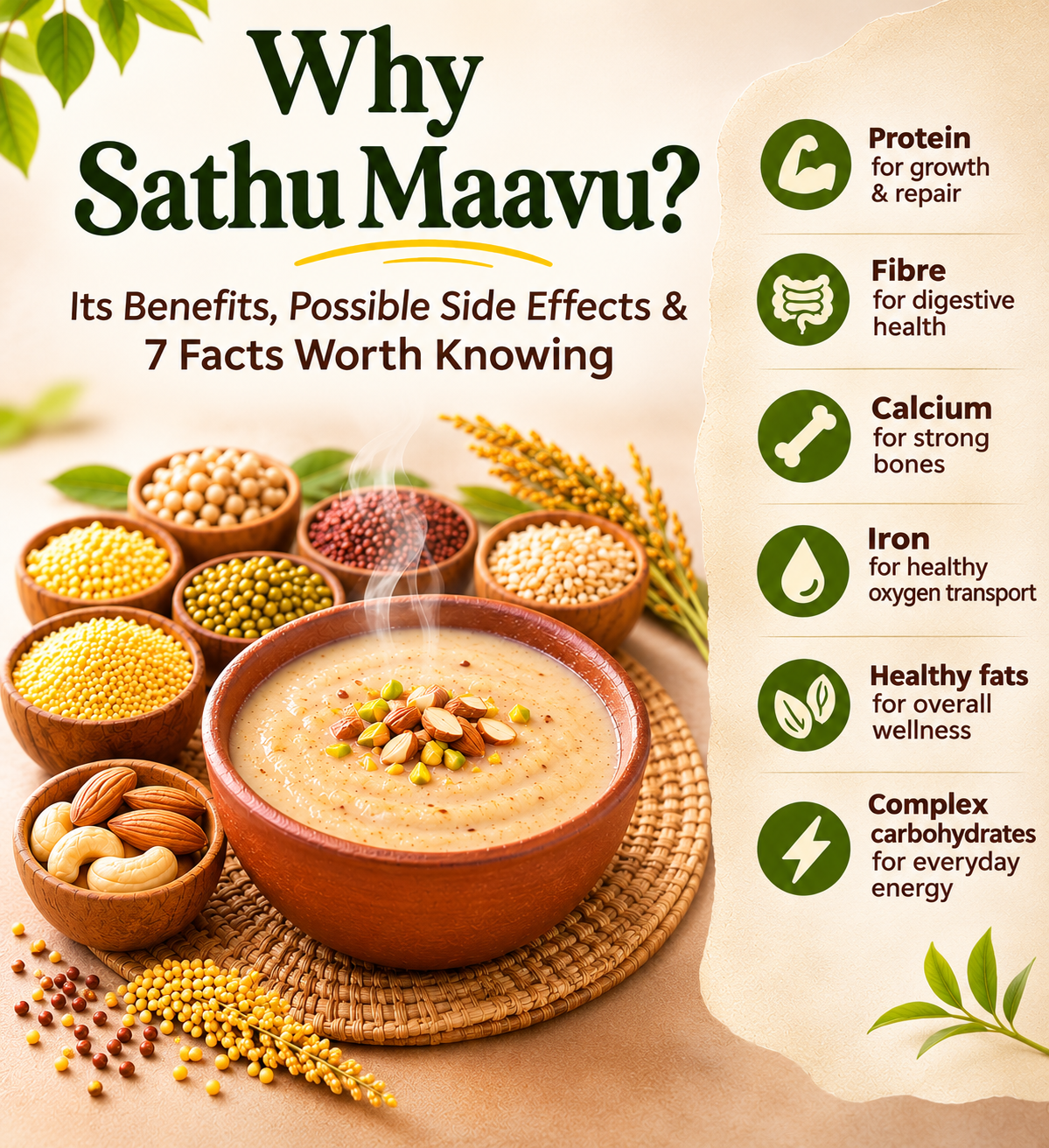
In many South Indian households, Sathu Maavu is more than just a health drink. It is a tradition passed down through generations, lovingly prepared by mothers and grandmothers who believed in nourishing their families with wholesome, everyday ingredients.
Long before packaged health drinks became popular, a warm bowl of Sathu Maavu kanji was a familiar part of family kitchens.
Traditionally known as Sathu Maavu, this nourishing multigrain preparation is also widely referred to as a Health Mix today. While the names may differ, the underlying idea remains the same: bringing together thoughtfully selected ingredients for everyday nutrition.
But what makes this traditional multigrain health mix so special? Why has it remained a familiar part of everyday nutrition for generations? And does Sathu Maavu have any side effects?
Let’s explore the benefits of Sathu Maavu, its nutritional value and seven important facts worth knowing.
Why Sathu Maavu?
Sathu Maavu, also known as a traditional multigrain health mix, is prepared using a combination of grains, millets, pulses, nuts and seeds.
Unlike a single-grain porridge, Sathu Maavu brings together ingredients with different nutritional characteristics, offering a convenient way to include several food groups in everyday meals.
Depending on the ingredients and their proportions, a multigrain health mix can provide:
- Protein: Pulses, grains, nuts and seeds contribute protein, which supports growth, tissue repair and maintenance.
- Dietary Fibre: Whole grains, millets and pulses provide fibre that supports digestive health and may help promote fullness.
- Calcium: Certain millets and seeds contribute calcium, an essential mineral for maintaining healthy bones and teeth.
- Iron: Grains, millets, pulses and seeds can contribute iron, which is needed for normal oxygen transport in the body.
- Healthy Fats: Nuts and seeds provide unsaturated fats and essential fatty acids.
- Complex Carbohydrates: Grains and millets provide energy for everyday activities.
The beauty of Sathu Maavu lies in its versatility. It can be prepared as a warm porridge, enjoyed at breakfast or incorporated into a balanced daily diet.
However, the nutritional value of a Health Mix depends not on the number of ingredients alone, but on their quality, proportions and preparation.
A carefully formulated Health Mix can be a convenient addition to everyday nutrition for different age groups, provided the ingredients and serving sizes suit their individual needs.
Does Sathu Maavu Have Side Effects?
Although Sathu Maavu offers several nutritional benefits, like any food, it may not suit everyone in exactly the same way.
Factors such as fibre intake, portion sizes, food allergies, gluten sensitivity and individual health conditions can influence how the body responds.
For most people, properly prepared Sathu Maavu can be enjoyed as part of a balanced diet.
Understanding a few important facts can help you choose the right Health Mix formulation and enjoy this traditional food with confidence.
Here are seven facts worth knowing before making Sathu Maavu part of your daily routine.
1. Fibre Is Beneficial, but Sudden Increases May Cause Bloating
The dietary fibre present in millets, whole grains and pulses supports digestive health.
However, individuals who are not accustomed to fibre-rich foods may initially experience bloating, gas or mild abdominal discomfort.
Introducing Sathu Maavu gradually, beginning with smaller portions and ensuring it is properly cooked, may help the digestive system adjust.
The fact: Fibre is an important part of a healthy diet. The key is introducing it gradually and consuming appropriate portions.
2. Sathu Maavu Can Support Both Weight-Gain and Weight-Management Diets
Sathu Maavu does not inherently cause weight gain or weight loss.
Its effect on body weight depends on the quantity consumed, the method of preparation and overall daily calorie intake.
When prepared with whole milk, nuts, ghee or additional sweeteners, it becomes more calorie-dense and may contribute to weight gain when total calorie intake exceeds energy needs.
On the other hand, a moderate serving of unsweetened Sathu Maavu can fit into a balanced, calorie-controlled diet. Depending on its formulation, its fibre and protein content may also contribute to fullness.
The fact: Sathu Maavu is neither exclusively a weight-gain food nor a weight-loss drink. Its role depends on how it is prepared and incorporated into the diet.
3. Millets Are Nutritious, but They Still Contain Carbohydrates
Millets are valued for their nutritional contribution, including fibre, minerals and other naturally occurring nutrients.
However, millets and other grains contain carbohydrates, which can influence blood glucose levels.
The type of grains, ingredient proportions, processing methods, portion sizes and accompanying foods all affect the body’s response.
This is particularly important for individuals managing diabetes, who may need to pay closer attention to their carbohydrate intake.
The fact: A millet-based Health Mix is not automatically low in carbohydrates. Thoughtful formulation and appropriate serving sizes matter.
4. Natural Ingredients May Still Contain Allergens
Sathu Maavu often brings together several nutritious ingredients, including grains, pulses, nuts and seeds.
However, ingredients such as peanuts, almonds, cashews, sesame, wheat and soy may trigger allergic reactions in susceptible individuals.
This does not make these ingredients unhealthy. It simply highlights the importance of understanding what goes into a multigrain Health Mix.
Reading ingredient lists and allergen information helps individuals and families choose products suited to their needs.
The fact: Natural and nutritious ingredients can still cause allergies. Ingredient transparency is an important part of making informed food choices.
5. Gluten and Thyroid Health: Understanding Individual Dietary Needs
Traditional Sathu Maavu formulations may contain ingredients such as samba wheat, barley and soybeans, each with different nutritional characteristics.
Samba wheat and barley naturally contain gluten, which must be avoided by individuals with coeliac disease and may not suit those with non-coeliac gluten sensitivity.
Soybeans, on the other hand, are naturally gluten-free. They provide plant-based protein and other nutrients but contain compounds called isoflavones, which have been studied for their potential influence on thyroid function.
Research suggests that moderate soy consumption is generally safe for most people, including many individuals with well-managed hypothyroidism. However, soy foods may interfere with the absorption of levothyroxine, a medication commonly prescribed for hypothyroidism.
Individuals taking thyroid medication should follow their healthcare professional’s guidance on the timing of soy-containing foods and medication.
The fact: Gluten-containing grains are not inherently unhealthy. What matters is understanding individual dietary needs and choosing a Health Mix formulation that suits them.
6. Traditional Processing Methods Can Make a Difference
Grains, millets and pulses naturally contain compounds such as phytates, which can influence the absorption of minerals including iron and zinc.
Traditional preparation methods such as soaking, sprouting and fermentation can help reduce phytate levels under suitable conditions.
Roasting can also improve the natural aroma, flavour and texture of ingredients, although its effects on nutrient availability depend on the ingredient and processing conditions.
The fact: Ingredient selection is important, but the way ingredients are prepared also contributes to the quality and characteristics of a Health Mix.
7. Quality and Preparation Matter as Much as Ingredients
The nutritional composition of Sathu Maavu is only one part of the picture.
The quality of raw materials, hygienic handling, appropriate drying or roasting, moisture control and storage conditions are equally important considerations.
Improper processing or storage may affect freshness, flavour and food safety.
A well-prepared Health Mix should also include clear cooking and serving instructions so that it can be consumed appropriately.
The fact: A thoughtfully prepared Health Mix is about more than combining nutritious ingredients. Careful handling, processing and storage are essential.
What Makes a Well-Formulated Health Mix Different?
A good Health Mix is not necessarily one that contains the longest list of ingredients.
Every grain, millet, pulse, nut and seed has a purpose.
Pulses contribute protein. Whole grains and millets provide carbohydrates, fibre and minerals. Nuts and seeds contribute fats, protein and other nutrients.
But the nutritional composition of the final mix depends on how much of each ingredient is included.
A small quantity of a nutrient-rich ingredient does not automatically make the entire product rich in that nutrient.